Fifteen years ago, enterprise technology solved authentication. No engineering team today builds a login system from scratch. They integrate with Okta, Microsoft Entra or another enterprise identity provider because authentication is universally understood to be a shared infrastructure capability. Centralizing authentication strengthened security, simplified governance, accelerated application development, and created a consistent identity layer across the enterprise.
Authorization took a very different path. Instead of becoming shared infrastructure, authorization remained buried inside application code. Every engineering team wrote custom permission checks. Every microservice interpreted business policy independently. Every API evolved its own access rules. Over time, enterprises accumulated thousands of isolated permission implementations, frequently enforcing the same underlying business policies in inconsistent, un-auditable ways.
For years, enterprises accepted this fragmentation as the unavoidable cost of building software. AI has rendered that assumption obsolete.
The success of authentication wasn't simply that it improved security. It created a platform that every application could consume. Developers stopped building identity systems and focused on building business functionality.
Authorization now stands at the same inflection point.
The Economics of AI-Era Software
Much of today's conversation around AI security focuses on immediate threats such as prompt injection, model poisoning, rogue autonomous agents, and data leakage. While these risks deserve attention, they also mask a broader architectural shift. AI is fundamentally changing the economics of both software creation and software analysis.
Developers are generating applications, APIs, and integrations faster than ever before. At the same time, initiatives such as Anthropic's Project Glasswing illustrate how AI is accelerating vulnerability discovery, compressing the time between writing software and identifying exploitable defects.
The implication for security leaders isn't simply that there will be more vulnerabilities to patch. It is that the long-held assumption underpinning modern vulnerability management—that defenders can consistently discover, prioritize, and remediate every vulnerability before it is exploited—is becoming increasingly difficult to sustain. Secure software development and vulnerability management remain essential, but resilience can no longer depend on eliminating every flaw. As AI accelerates both software creation and vulnerability discovery, enterprises must also ensure that the vulnerabilities which inevitably remain cannot easily escalate into business-impacting incidents. That shifts the focus from preventing every exploit to controlling what an attacker—or an AI system—is allowed to do after an exploit occurs.
Flaws Are Technical; Breaches Are Authorization Failures
A software vulnerability is rarely a business crisis on its own. The crisis begins when a flaw allows an attacker, or a delegated AI agent, to execute actions they should never have been permitted to perform.
- Can an exploited service retrieve another customer's data records?
- Can an unprivileged endpoint invoke administrative APIs?
- Can an agent modify financial ledgers or exfiltrate intellectual property?
These are not vulnerability management failures. They are authorization failures.
This explains why Broken Access Control remains the #1 global risk on the OWASP Top 10, and why authorization flaws like Broken Object Level Authorization (BOLA) account for over 60% of API security incidents. The industry has spent two decades perfecting code scanners to find technical flaws, while neglecting the structural layer that determines whether those flaws become business-impacting disasters.
From Access Decisions to Action Decisions
Traditional applications answered static, binary access questions at login e.g. Does User X have permission to view Page Y?
Autonomous AI systems operate under a completely different execution model. An enterprise assistant receives an objective, interprets intent, queries data warehouses, calls external tool APIs, and orchestrates multi-step workflows across disparate internal systems. A single user prompt can trigger dozens of autonomous downstream transactions.
This transforms the core requirement of access control. The enterprise is no longer merely authorizing a human user to view a page; it is authorizing a continuously evolving sequence of actions executed by software on that user's behalf.
AI didn't create the authorization problem. It exposed it. The fragmentation that enterprises tolerated when applications served human users becomes increasingly difficult to manage when software itself begins executing work. AI simply makes an architectural weakness impossible to ignore.
This is why Gartner’s AI TRiSM emphasize continuous runtime inspection and enforcement. Authorization can no longer be a static check performed once during session establishment. It must operate as a dynamic, real-time control plane.
Decoupling Authorization into Shared Infrastructure
Organizations no longer need to treat authorization as custom code embedded inside microservices. Just as identity providers centralized authentication, authorization is ready to move into shared enterprise infrastructure.
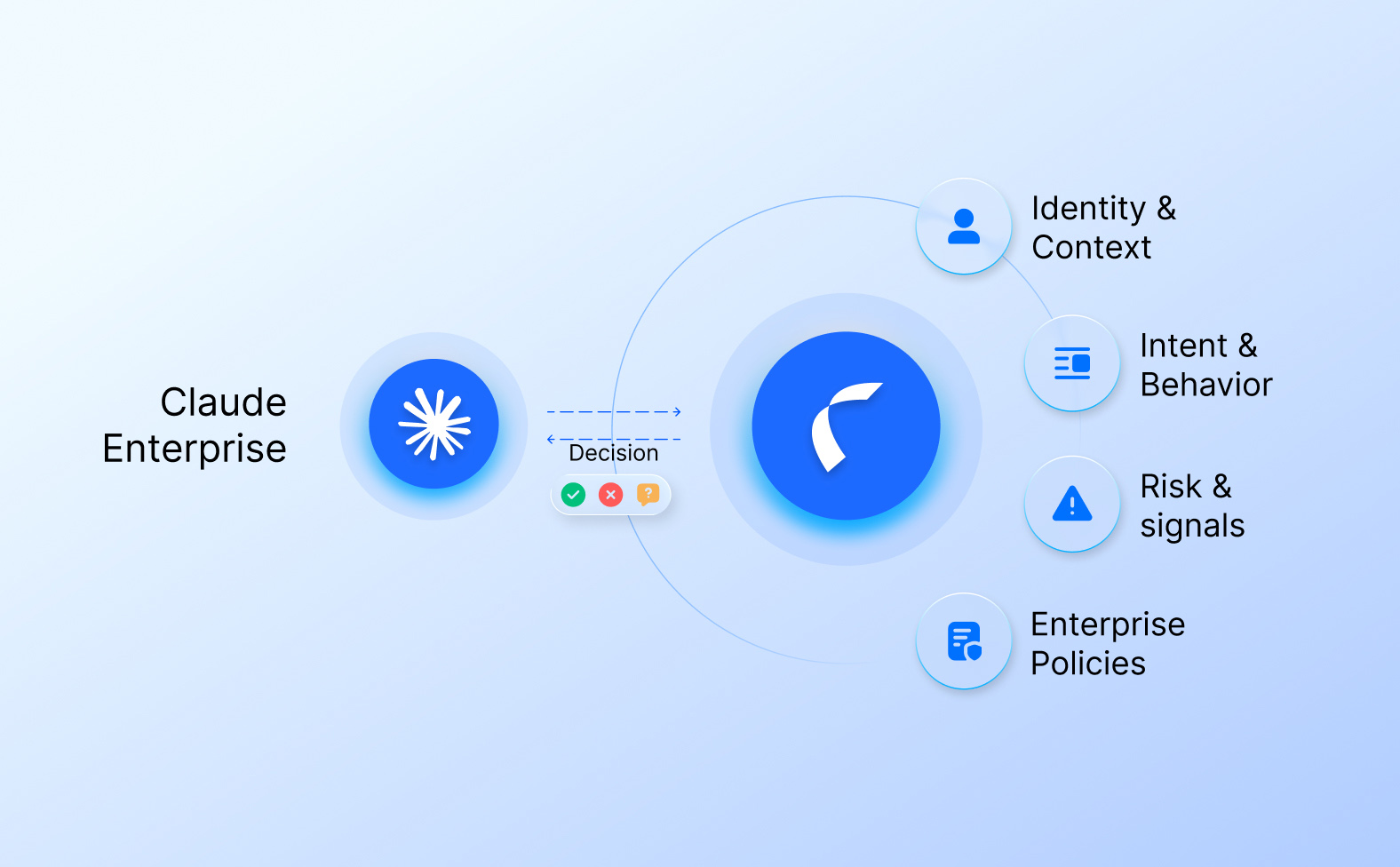
Modernizing authorization isn't simply about moving permission checks out of application code. It's about creating a shared decision layer that evaluates every request consistently across applications, APIs, data platforms, cloud services, and AI agents. Authentication solved identity. Modern authorization solves decisions.
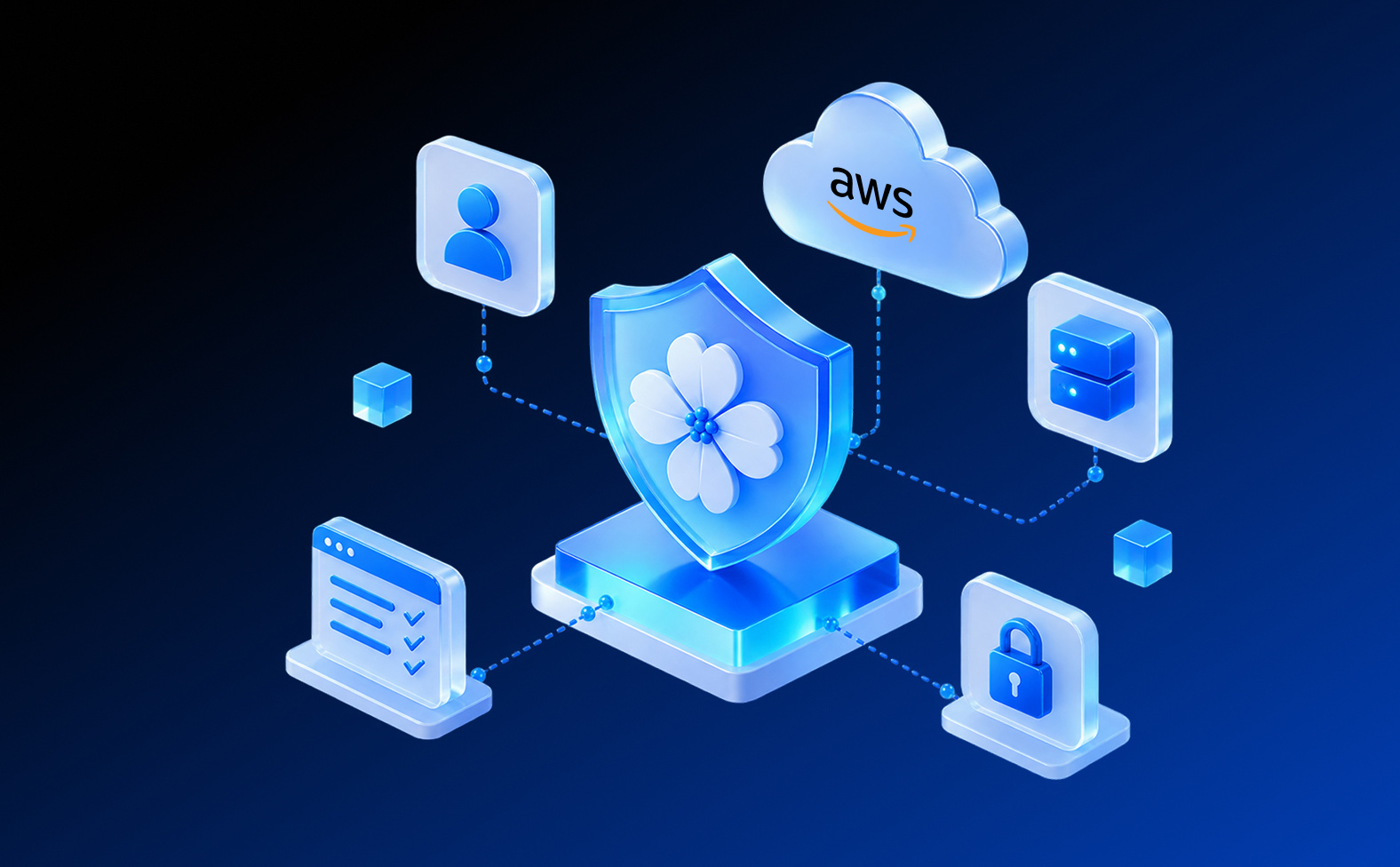
By externalizing authorization into a centralized policy layer, enterprises separate policy governance from application code and establish a common authorization service that every application, API, data platform, and AI agent can consume. This architectural approach is increasingly supported by industry standards such as the OpenID Foundation's AuthZEN and implemented through modern Policy-as-Code frameworks, enabling consistent authorization decisions across heterogeneous environments. This fundamentally changes how authorization is managed across the enterprise:
- Security Teams define, audit, and update access policies globally in version-controlled repositories without touching application source code.
- Developers focus on building core business features, consuming authorization as an external platform service.
- Enterprise Risk is dramatically reduced because object-level access controls (ReBAC/ABAC) are applied uniformly across APIs, microservices, data platforms, and AI agents.
The Platform Mandate
AI will continue to accelerate software creation, expand enterprise attack surfaces, and compress the window between writing code and discovering vulnerabilities. Attempting to out-patch machine-speed discovery is a losing strategy.
The organizations that lead in the AI era will architect their environments so that inevitable software defects have no path to escalate into material security events.
The identity industry solved authentication several years ago by turning it into a shared platform. The AI era presents the exact same mandate for authorization. Just as no enterprise today would consider building its own identity provider from scratch, no modern enterprise should continue building custom authorization from scratch either.
.svg)