The cloud-native era has changed how organizations build and run applications. Microservices, APIs, containers, and serverless functions are now the foundation of modern systems.
This distributed architecture speeds up innovation. However, it also makes access control more complex. Authorization often struggles to keep up with this rapid change.
Traditional approaches such as static roles or older Privileged Access Management (PAM) tools were designed for predictable, centralized systems. In cloud environments, these methods often fail. They can lead to complexity, over-permissioned users, and compliance risks.
OWASP consistently ranks Broken Access Control as a top application security risk, reinforcing how fragile traditional authorization models have become in modern distributed systems.
Organizations need a new approach. They need a system that is scalable, context-aware, and adaptable to change.
Policy as Code (PaC) offers a solution. By encoding authorization rules into machine-readable, version-controlled policies, PaC brings precision and flexibility to access control.
Why Traditional Authorization Fails
Static Roles Are Too Rigid
Role-Based Access Control (RBAC) assigns permissions to roles such as admin, developer, or analyst. This works for small, stable systems. But in large cloud-native environments, RBAC creates serious challenges:
- Role explosion: Hundreds of services require many roles, creating thousands of combinations.
- Complexity: Administrators struggle to track what each role grants.
- Over-permissioning: Users often receive more access than necessary.
- Audit risk: It becomes difficult to prove compliance.
Modern compliance frameworks such as NIST SP 800-53 and ISO 27001 emphasize least privilege and separation of duties, both of which are difficult to enforce when role sprawl becomes unmanageable.
PAM Tools Are Too Reactive
PAM tools control powerful accounts such as system administrators. They provide guardrails for critical operations.
However, they are designed for fixed infrastructure and long-lived accounts. In cloud-native systems, workloads can appear and disappear in minutes. PAM is too slow and static to provide effective control.
As organizations adopt Zero Trust architectures, defined in NIST SP 800-207, authorization decisions must be continuous and context-aware rather than tied to static privileged sessions.
Binary Decisions Are Not Enough
Legacy systems typically enforce simple yes-or-no access decisions. This binary model is too limited for modern environments.
For example:
- Should a support agent view sensitive data from an unmanaged device?
- Should a high-value transaction be allowed without additional verification?
Static rules cannot account for device health, time of day, risk level, or real-time threats. This limits security and slows business operations.
Characteristics of Cloud-Native Authorization
A modern authorization approach must include more than traditional user-role mapping. Modern systems also rely heavily on non-human identities such as service accounts and automated workloads, further increasing the need for precise runtime authorization.
A modern authorization approach must include:
- Auditability: Log every access decision for compliance and investigation.
- Externalization: Keep authorization logic separate from application code for easier updates.
- Scalability: Work across distributed systems, microservices, and multiple clouds.
- Context awareness: Consider risk scores, geolocation, device status, and transaction details.
- Granularity: Make decisions at the level of individual actions on specific resources.
Policy as Code: The Cloud-Native Solution
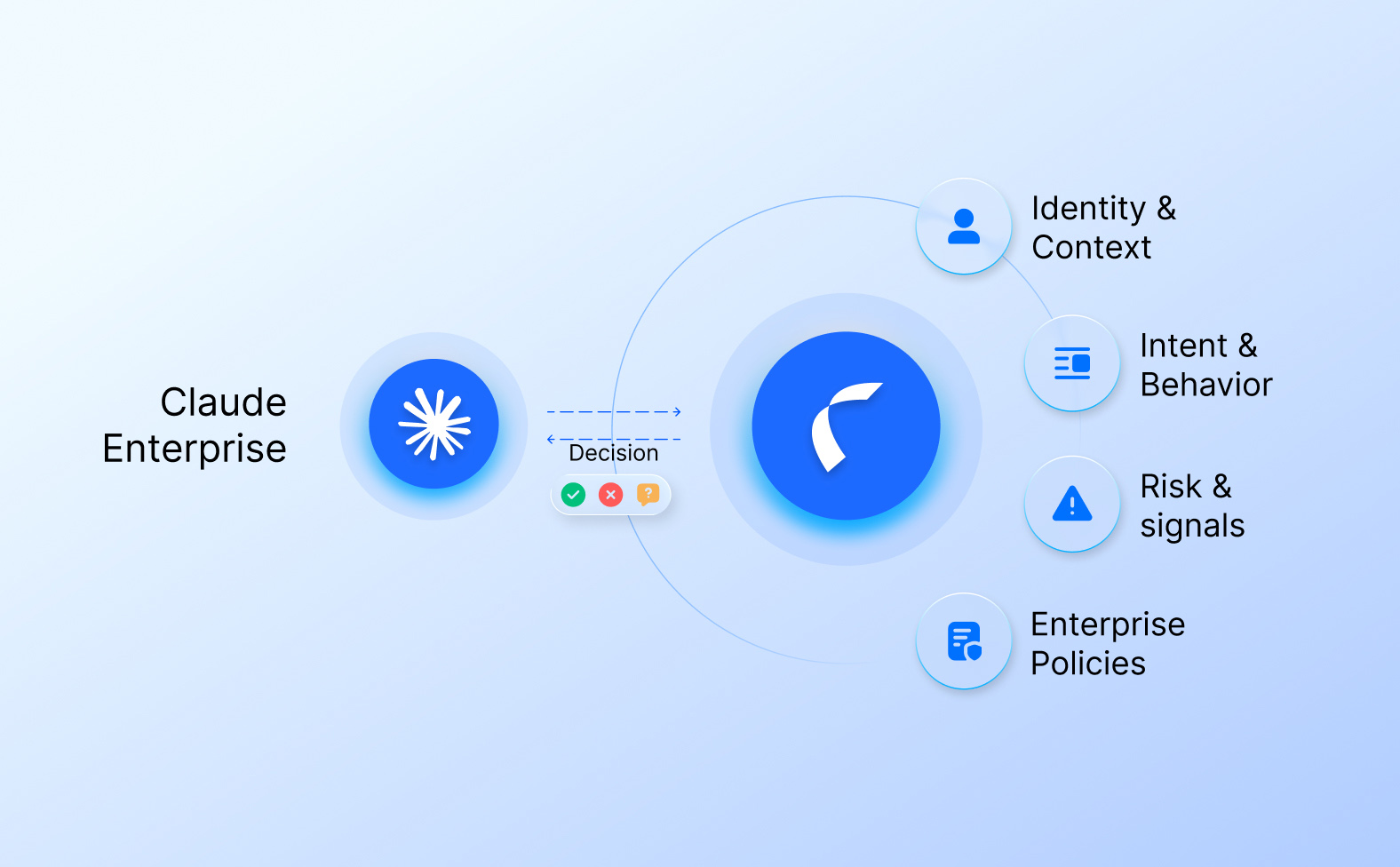
Policy as Code applies software engineering principles to access control. Instead of hardcoding rules into applications, policies are written in a declarative language and executed by policy engines at runtime.
This approach mirrors the broader shift toward Infrastructure as Code within the CNCF ecosystem, where declarative configuration and version control have become standard engineering practice.
Key Benefits
- Consistency: Policies are centrally defined and enforced across environments.
- Automation: Teams can test and deploy policies using CI/CD pipelines.
- Collaboration: Security teams and developers can co-author and review policies.
- Transparency: Policies are human-readable and machine-executable, simplifying audits.
- Agility: Teams can update rules without rewriting application code.
Alignment with DevOps
Just as Infrastructure as Code transformed infrastructure management, Policy as Code brings similar advantages to security:
- Version control: Track, review, and reverse changes easily.
- Testability: Validate policies before deployment.
- Scalability: Apply rules programmatically across thousands of services.
Real-World Frameworks
Several frameworks support Policy as Code in production environments:
- Cedar: Focused on fine-grained, context-aware authorization. Powers services like Amazon Verified Permissions.
- Open Policy Agent (OPA): A general-purpose engine using the Rego language, widely adopted in Kubernetes, APIs, and microservices.
- Kubernetes Gatekeeper: Built on OPA to enforce policies in Kubernetes admission control.
These tools demonstrate that Policy as Code is not theoretical. It is already operating at scale in modern systems.
Enterprise Use Cases
- Multi-Cloud Access Control
Enterprises operate across AWS, Azure, GCP, and on-premises systems. Hardcoding roles for each platform creates fragmentation. Policy as Code provides a single source of truth for access rules.
- Microservices at Scale
Service meshes with hundreds of APIs make manual access management impossible. Policies such as “Only services in namespace A can call API B” can be defined once and enforced consistently.
- Regulatory Compliance
Industries like healthcare, finance, and retail require strong audit trails. Policy as Code ensures versioned, reviewable, and testable policies for compliance with GDPR, HIPAA, PCI DSS, and SOX.
- Risk-Adaptive Access
Policies can adapt to dynamic signals:- “Deny high-value transactions if the user’s risk level is high.”
- “Require MFA for administrative actions outside business hours.”
This improves both security and user experience.
Common Concerns
Is Policy as Code Too Complex?
Languages like Rego and Cedar are concise and human-readable. Centralizing authorization simplifies management and reduces scattered rules.
Does It Affect Performance?
Policy engines are optimized for speed and often cache common decisions. Authorization checks usually add minimal latency.
How Do Organizations Start?
Begin with a focused use case, test policies in CI/CD pipelines, and expand gradually. Authorization should be treated as a core part of application design, not an afterthought.
The Future of Authorization
Trends shaping modern authorization include:
- Risk-adaptive authorization with real-time evaluation
- Emerging standard policy languages and APIs
- AI-assisted policy authoring and validation
- Shift-left security practices for earlier testing
Policy as Code moves authorization from static configuration to runtime evaluation. It brings authorization into modern engineering workflows and provides a secure, scalable foundation for cloud-native systems.
The shift to cloud-native systems is accelerating. Now is the time to rethink how your organization approaches authorization. Start small. Externalize a critical access decision. Experiment with Policy as Code. Build a foundation that scales with your business.
The sooner you begin, the faster you can reduce risk while enabling agility.
See how runtime, fine-grained authorization can be implemented without embedding logic into application code. Request a Reva demo to explore how modern Policy as Code can power secure, compliant, cloud-native systems.
.svg)