Last week, I shared a LinkedIn post asking a simple question: When the security control protecting your coding agent fails, does the agent stop, or does it keep executing?
The post generated considerable interest, so I thought it was worth exploring the issue further.
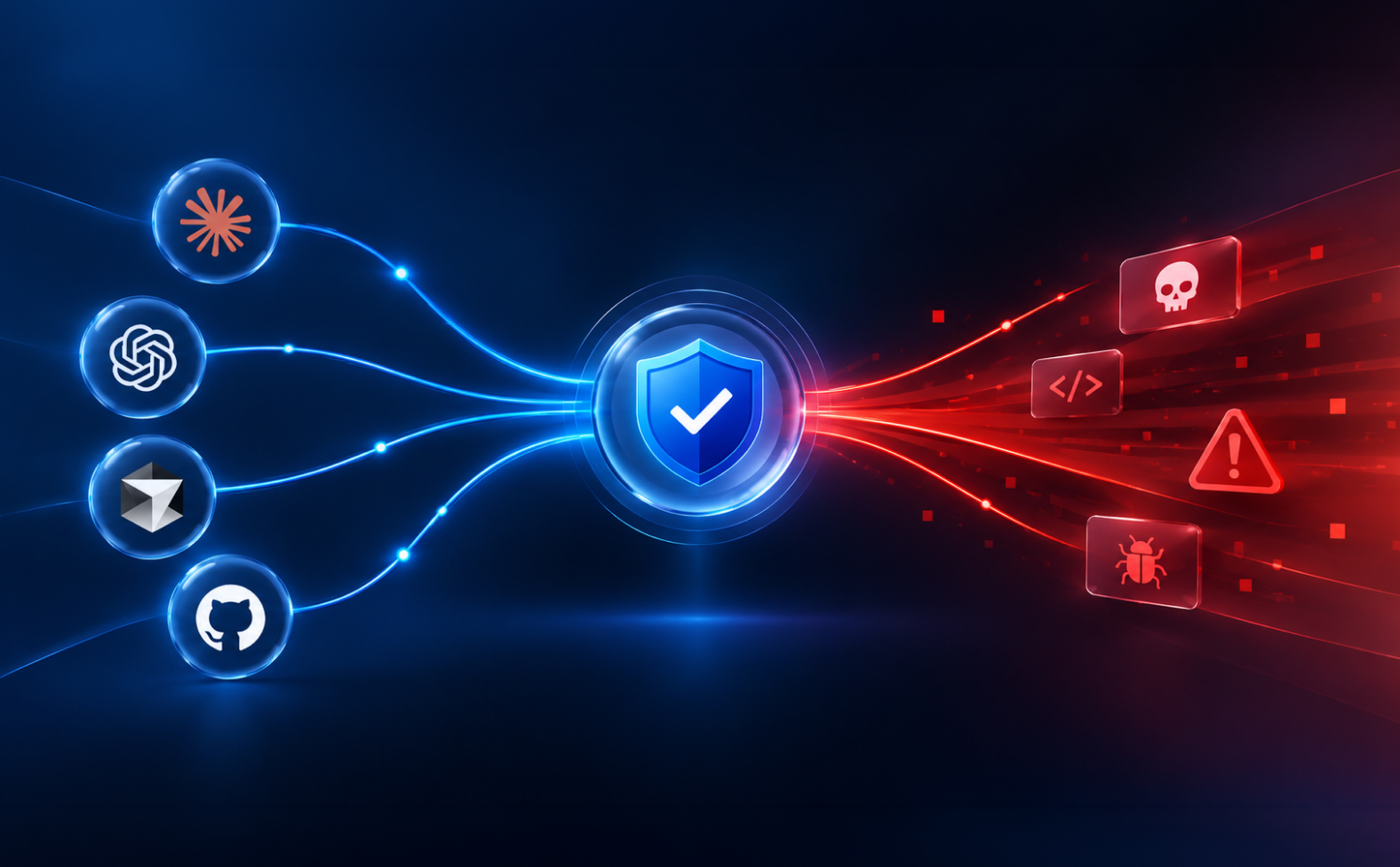
As enterprises adopt Claude Code, Codex, Cursor, and GitHub Copilot, coding agents are moving well beyond code generation. They're executing commands, modifying repositories, accessing sensitive information, and interacting with cloud infrastructure.
This changes the security equation. Having the right policies is only half the battle. The other half is making sure those policies are still enforced when the control enforcing them breaks.
The hidden risk in coding agent hooks
Most coding agents support hooks that intercept actions before execution, allowing security controls to evaluate and potentially block risky operations. But what happens when a hook crashes, times out, or cannot reach its policy engine?
A recent Developers Digest analysis examined this problem across several coding agents. In one test, a hook pointing to a nonexistent script failed, yet the agent continued executing the command. There was no indication in the agent's final response that the security check had been skipped.
This is fail-open behavior: when the security control fails, the action proceeds without the intended authorization.
Anthropic has added an opt-in fail-closed setting to Claude Code, scoped to command and HTTP hooks, and Cursor offers a similar per-hook option. Neither is on by default, and Codex doesn’t document an equivalent. These are welcome improvements, and every enterprise should enable them for security-critical hooks. But they don’t solve the larger problem. Each agent has its own setting, scope and version history, so a policy that fails closed in one agent can fail open in another. And no setting catches a control that fails while reporting success.
What recent security incidents tell us
Two recent examples illustrate why enterprises cannot rely solely on the permissions and protections available within an agent's execution environment.
Claude Code and AWS credential exfiltration
In an internal red-team exercise described by Anthropic in May 2026, a researcher crafted instructions that led Claude Code to read local AWS credentials and transmit them to an external endpoint. The exfiltration succeeded in 24 of 25 test attempts.
This was a controlled exercise, not a breach. But it exposed a basic problem: the instruction came from the user, so there was nothing obviously malicious for the model to catch.
An action can be technically permitted and still be completely inappropriate for the task.
An agent working on a development task has no reason to extract cloud credentials and send them externally. Traditional permissions alone cannot make that distinction. This is why understanding the agent's intent and detecting behavioral deviations matter as much as enforcing access policies.
Malicious Claude Code extension in Cursor
In October 2026, a tampered copy of the Claude Code extension (version 2.1.313) was available on Cursor's extension marketplace for about 11 hours. Cursor estimated that up to 5,000 developers were exposed. The malicious code ran as soon as the editor loaded the extension and tried to plant an SSH backdoor for persistent remote access. Anthropic said it didn't build or publish this version, and the extension on its official channels was not affected.
This was a supply-chain compromise rather than a hook failure. Nevertheless, it highlights a related concern: developer environments are becoming privileged execution surfaces, often with access to enterprise repositories, credentials, and infrastructure.
If the environment itself is compromised, what independent security boundaries remain to protect enterprise resources?
Hooks are valuable, but they cannot be the only line of defense.
Why fail-closed must be an architectural principle
Consider three possible outcomes when a coding agent attempts an action:
- Permit: The security control evaluates and authorizes the action.
- Deny: The control evaluates and blocks the action.
- Unable to evaluate: The control is unavailable, times out, or fails to produce a reliable decision.
The third outcome is the main concern.
When a mandatory security control cannot evaluate an action, the agent should stop. The absence of a decision must never be interpreted as permission. This may inconvenience developers, but selectively allowing actions to continue when enforcement fails undermines the very purpose of having security controls.
The real challenge is designing an architecture where these failures are rare, immediately visible, and contained.
Building a resilient security control plane
As coding agents become part of enterprise development workflows, I believe four principles need to guide security architecture.
1. Consistent policies, distributed enforcement
Security policies should be centrally governed and consistently enforced across coding agents, regardless of which tool a developer uses.
Enforcement needs to happen close to the action, whether that's a local command, an API call, a repository change, or an interaction with an MCP server. A centralized control plane should not become a single point of failure. Distributed enforcement, redundancy, and high availability are essential to ensuring security remains operational.
2. Fail securely, without silent bypasses
A failed policy evaluation must result in a secure stop, not implicit permission.
Equally important, enterprises must know whether enforcement is actually functioning. A hook that was never installed, has been disabled, or fails without reporting an error can leave organizations with a false sense of security. This requires continuous health monitoring of enforcement points, immediate notification of failures, and visibility into which agent sessions and actions were affected.
3. Evaluate intent and behavior continuously
An agent may have permission to execute a command but still be acting outside its assigned task.
Runtime security must evaluate whether an action aligns with the agent's original intent, expected behavior, context, and delegated authority. This becomes particularly important when agents interact with multiple tools or delegate work across other agents. Intent needs to be preserved across these interactions, while behavioral anomalies must be detected before actions reach sensitive systems.
Authorization can no longer be a one-time permission check. It must continuously adapt as the agent operates.
4. Build independent security boundaries and accountability
Hooks provide useful interception points, but enterprises also need controls at the API, credential, network, and resource layers.
Equally important is maintaining an auditable record of agent activity: what was requested, which actions were attempted, what decisions were made, and under whose authority. When enforcement fails, security teams need immediate visibility and the ability to contain the affected workflow, revoke access, or suspend an agent before the problem escalates.
A security control that silently stops working is not a reliable security control.
Holding security platforms to the same standard
At Reva.AI, we're building toward this model through runtime authorization, intent and behavior evaluation, and consistent policy enforcement across coding agents. We also use native agent hooks as enforcement points, which means we must hold ourselves to the same standards.
When an action reaches Reva's enforcement point but cannot be evaluated, it should be blocked rather than implicitly authorized. But if an enforcement point is disabled or bypassed entirely, the policy decision service may never receive that action.
That's why fail-closed behavior alone isn't enough. Enterprises also need enforcement integrity, independent security boundaries, and continuous visibility into coverage gaps.
I believe every enterprise evaluating coding agent security should ask:
- What happens when the security control becomes unavailable?
- Can enforcement be disabled or bypassed, and would we know?
- How quickly can we identify affected agents, sessions, and actions?
- What independent controls remain if an agent or its execution environment is compromised?
Fail-closed is the starting point. Resilience is the goal.
As coding agents gain greater autonomy and access to enterprise systems, security enforcement cannot be treated as an optional guardrail.
Fail-open creates security exposure. Fail-closed without resilience creates operational disruption. Neither should be acceptable as the target architecture.
The answer is a resilient security control plane that consistently enforces policy, evaluates intent and behavior, detects failures early, and provides the visibility needed to contain incidents.
The goal isn't to introduce more approvals or slow down developers. It's to enable agent autonomy within security boundaries that remain effective even when individual components fail.
That's the foundation of runtime trust for the agentic enterprise.
References