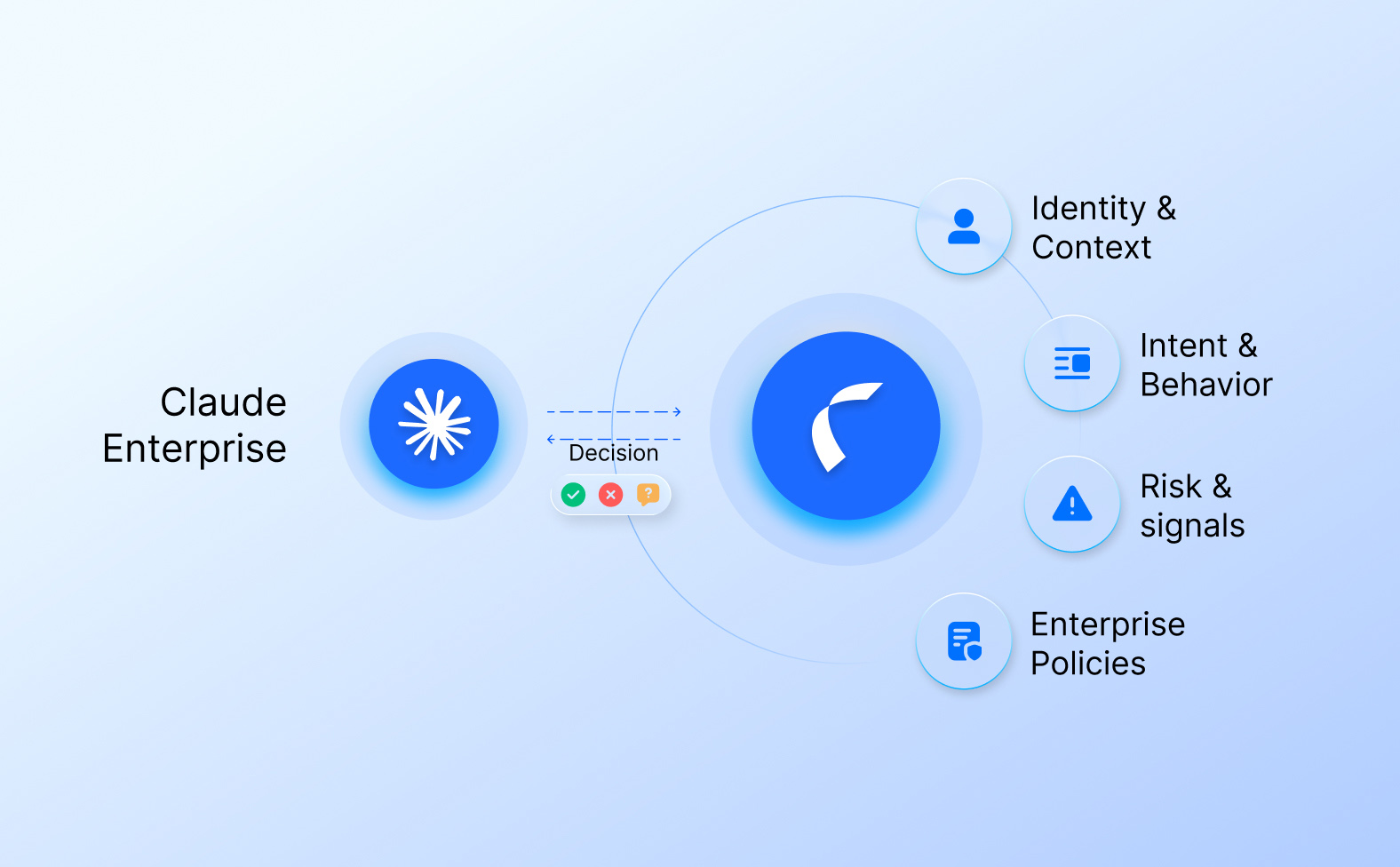
Policy as Code helps organizations stay fast and compliant at the same time. It turns access rules and compliance policies into readable, testable, and traceable code. This article explains how industries such as finance, healthcare, and the public sector are using this approach to meet regulations like PCI DSS, HIPAA, GDPR, and SOX while enabling innovation. It also shows how Reva guardrails, simulations, and decision logs keep compliance continuous and reliable.
Why Regulated Industries Need a New Governance Model
Finance, healthcare, and public sector organizations handle the world’s most sensitive data. They must prove that every access, transaction, and decision meets strict security and privacy requirements defined by:
Traditional governance models struggle in modern environments. Manual approvals, outdated role structures, and static access controls slow teams down and fail to scale with cloud and digital platforms.
Policy as Code changes this model. It allows teams to define who can access what in code that can be reviewed, tested, and updated automatically. Compliance becomes part of the delivery process instead of a manual afterthought.
This approach aligns with modern security guidance such as:
- NIST SP 800-53 (Security Controls)
- NIST Zero Trust Architecture (SP 800-207)
Policy as Code: Making Compliance Work Like Software
Policy as Code treats access rules like software components. Policies are stored in version control, reviewed by peers, tested before release, and monitored continuously.
This model builds on community-driven standards and tooling such as:
- Open Policy Agent (OPA)
- Cedar Policy Language
- AuthZEN OpenID Authorization APIs
With this approach, organizations can:
- Keep policies consistent across applications and services
- Update policies quickly without changing application code
- Test and validate rules in advance to prevent compliance gaps
- Maintain decision logs that explain every authorization outcome
- Provide full audit trails for regulators and internal reviewers
The result is faster delivery with built-in governance. Teams no longer need to choose between innovation and control.
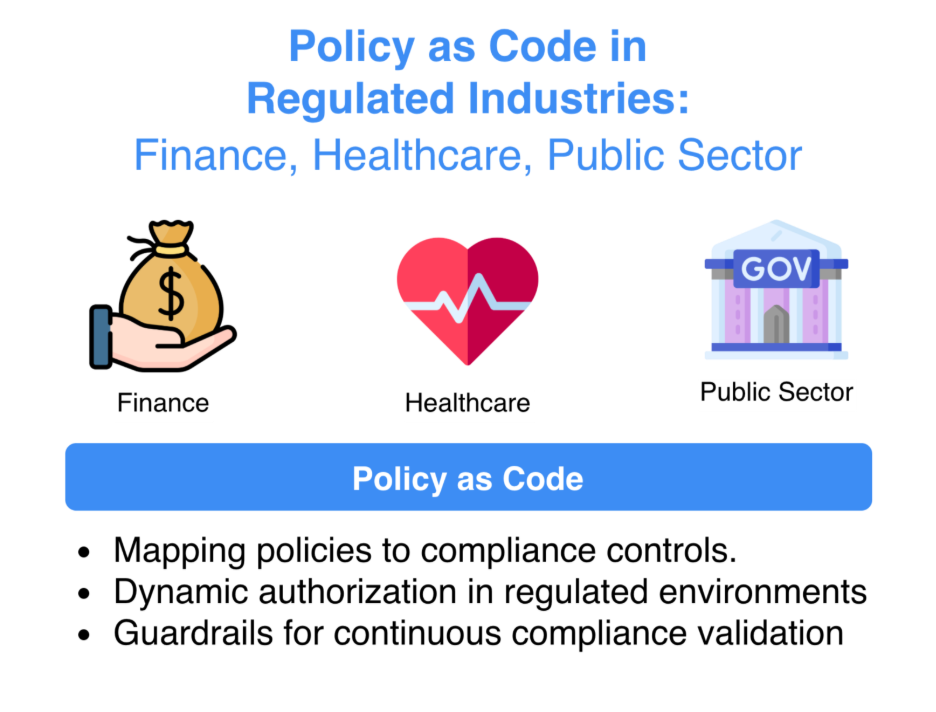
Finance: Real-Time Risk Control and Audit Readiness
Financial systems require strong internal controls and detailed audit evidence. Manual role reviews and hardcoded access rules often lead to errors, access sprawl, and high audit costs.
Policy as Code helps financial organizations manage risk more effectively by:
- Linking policies directly to PCI DSS and SOX control requirements
- Applying real-time checks based on transaction limits or approval status
- Automating separation of duties and escalation workflows
- Capturing decision logs for every transaction authorization
Before Policy as Code:
- Manual Separation of Duties: Compliance teams manually verify that the person requesting a trade is not the same person approving it.
- Static Limits: Hardcoded transaction limits are difficult to update across multiple legacy services.
- Audit Friction: Auditors must sample weeks of logs to reconstruct why a specific high-value transfer was allowed.
After Policy as Code with Reva:
- Automated Guardrails: Logic is embedded to check for separation of duties instantly at the API level.
- Dynamic Thresholds: A central policy allows $5,000 transfers automatically while triggering multi-factor authentication for higher amounts.
- Audit Readiness: Every decision generates an immutable log. Reva provides a clear trail showing exactly which policy authorized a transaction.
Healthcare: Privacy That Adapts to Care Needs
Healthcare organizations must balance patient privacy with quick, secure access to data. Doctors and nurses often need information urgently, but every access must still meet HIPAA and HITECH standards.
Policy as Code supports context-aware authorization. Access decisions consider who is requesting data, why it is needed, and where the request originates.
Before Policy as Code:
- Broad Role Access: A nurse might have access to all patient records in a department regardless of whether they are currently on duty.
- Location Blindness: Systems struggle to distinguish between a doctor accessing data on-site versus a request coming from an unmanaged public network.
- Compliance Lag: Privacy officers only discover unauthorized access attempts during periodic retrospective reviews.
After Policy as Code with Reva:
- Context-Aware Decisions: Access is granted only during an active shift, on a hospital-issued device, and within the secure network.
- Continuous Visibility: Reva’s guardrails monitor policies in real time to prevent "over-provisioning" or the accidental removal of consent checks.
- Immediate Traceability: Every access attempt is captured in a decision log. This gives healthcare teams full visibility into why a specific patient record was opened.
Public Sector: Transparent and Accountable Access
Government systems must serve citizens securely while meeting laws for privacy, transparency, and data sovereignty.
Policy as Code helps public agencies manage this complexity by:
- Reusing consistent access rules across departments
- Enforcing Zero Trust access for employees and contractors
- Supporting data classification and residency requirements
- Generating decision logs and audit records for compliance teams
Example:
A data-sharing policy can allow access to anonymized citizen data for research while blocking direct identifiers unless a specific legal condition is met.
With Reva, agencies can trace every access request end to end. Decision logs show which user or service accessed which dataset, when the access occurred, and which policy allowed or denied it.
Continuous Compliance with Guardrails
Reva enhances Policy as Code with built-in guardrails that keep compliance active and ongoing.
This approach supports guidance from:
- OWASP Top 10, Broken Access Control
- NIST Continuous Monitoring recommendations
Key capabilities include:
- Mapping policies to regulatory frameworks
- Simulating access decisions before deployment
- Real-time alerts for policy violations
Compliance becomes continuous rather than periodic.
The Future: Regulated Does Not Mean Rigid
Policy as Code allows regulated industries to move faster without losing control. It makes compliance measurable, transparent, and automated.
Finance, healthcare, and public sector organizations can modernize with confidence. With Reva’s guardrails, policy simulations, and decision logs, governance becomes a continuous and collaborative process rather than an obstacle to progress.
Key Takeaways for Modern Governance
- Codify Your Compliance: Map regulatory requirements like HIPAA, PCI DSS, and SOX directly to executable policy code to eliminate interpretation errors.
- Move Beyond Roles: Use context-aware authorization to grant access based on real-time factors like shift timing, device health, and network location.
- Automate Audit Evidence: Replace manual sampling with automated decision logs that capture the "Who, What, and Why" of every access request.
- Shift Governance Left: Use Reva’s simulations and guardrails to catch compliance violations during the development phase before they reach production.
- Decouple Policy from Logic: Update your security rules instantly across the entire enterprise without needing to recompile or redeploy your applications.
Visit Reva and schedule a demo to see runtime authorization, decision logs, and governance workflows in action.
.svg)