A Practical Guide to Evolving Enterprise Authorization with Minimal Disruption
Authorization determines who can act, on what, and under which conditions across applications, data, and infrastructure. In most enterprises, it is also one of the least visible and least governed parts of the security stack.
Over time, authorization logic spreads across application code, entitlement systems, APIs, databases, and infrastructure policies. Each layer evolves independently. What starts as a reasonable design slowly becomes fragmented, hard to change, and difficult to explain.
As enterprises adopt cloud platforms, microservices, Zero Trust models as outlined in NIST SP 800-207 zero standing privilege expectations, and AI-driven systems and agents, this fragmentation becomes a serious risk. Authorization is no longer a background concern. It is a core dependency for security, compliance, and delivery speed.
OWASP continues to rank Broken Access Control as one of the most critical application risks:
This blog introduces The Authorization Migration and Modernization Blueprint, a structured approach that helps enterprises move from fragmented access control to a unified, policy-driven authorization control plane without breaking production systems.
The Enterprise Authorization Reality
Most enterprises face similar authorization challenges, even if the symptoms differ.
Authorization rules are often hardcoded. Different teams implement access checks in different ways. Policies are copied, modified, and forgotten as systems evolve. Over time, enforcement becomes inconsistent and fragile.
Common outcomes include:
- Inconsistent access control across applications
- Limited visibility into who can access sensitive resources
- Over-permissioned roles that violate least-privilege principles, a core principle in NIST SP 800-53 Access Control (AC) family
- Audit fatigue: High-cost, manual compliance cycles that drain engineering resources to complete.
- Risky hotfixes made under operational pressure
Security teams struggle to answer audit questions with confidence. Developers hesitate to change authorization logic because the impact is unclear. This creates authorization debt that grows quietly over time.
Why Authorization Modernization Can Be Done Safely
Most organizations understand that authorization modernization is necessary. What often holds teams back is not lack of intent, but the desire to protect stability.
Authorization sits on the critical path of every application. Any change must preserve access, workflows, and business continuity. This caution is well founded.
The good news is that authorization can now be modernized incrementally, without forcing high-risk cutovers. Proven patterns from the cloud-native ecosystem, including external policy engines such as Open Policy Agent (OPA) and policy languages such as Cedar demonstrate how authorization can be decoupled safely from application code.
Instead of large replacement programs, successful organizations introduce a modern policy foundation alongside existing systems, observe real behavior, and migrate decisions in controlled phases. Changes remain observable, reversible, and auditable by design.
When approached incrementally, authorization modernization becomes one of the safest transformations an enterprise can make.
Externalized Authorization as the Foundation
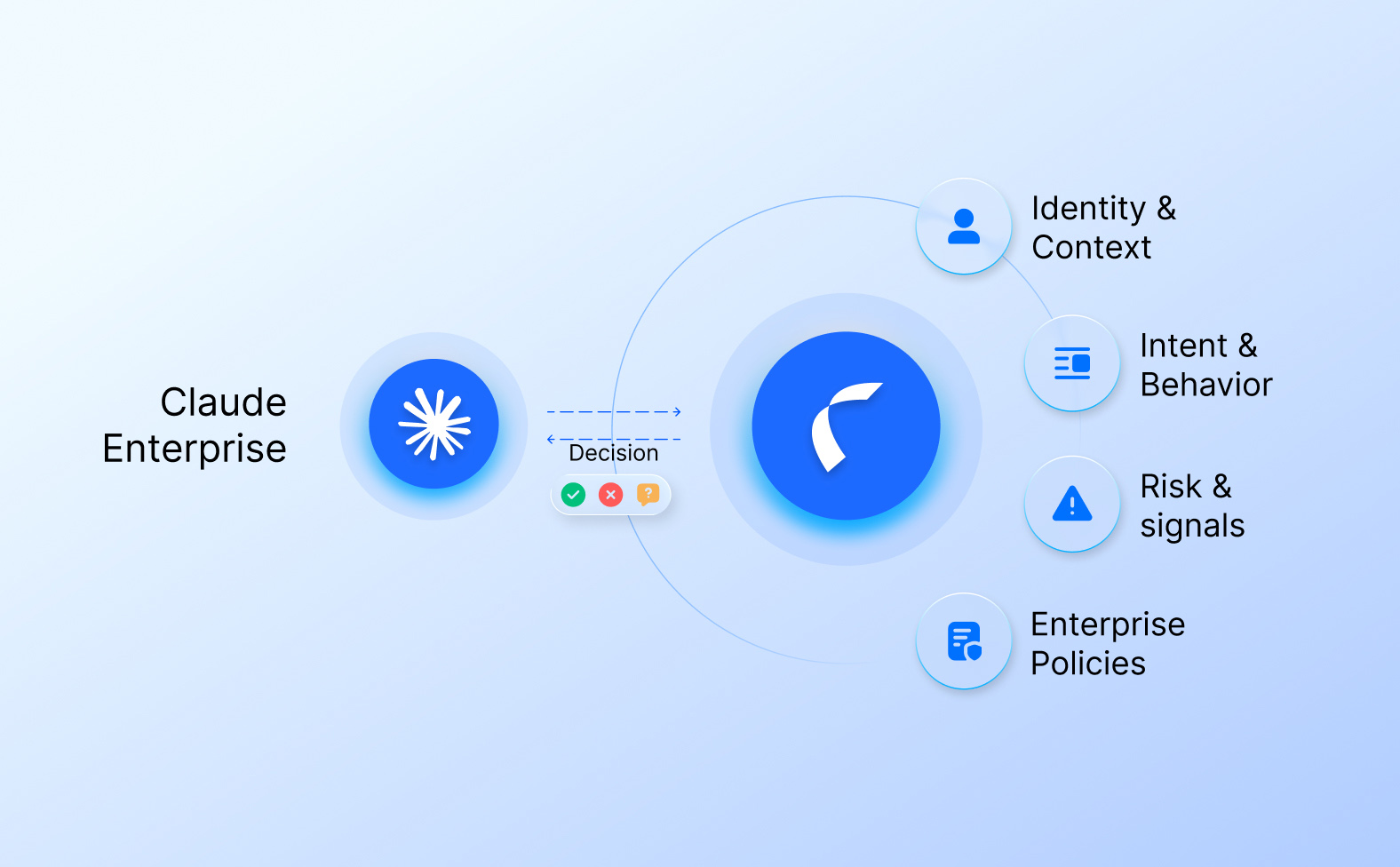
The architectural shift that enables safe modernization is externalized authorization, often implemented as an authorization control plane that applications call for decisions rather than hardcoding rules.
In this model, applications no longer make access decisions on their own. Instead, they ask an external decision service. Policies live outside application code and are evaluated through a centralized decision layer.
This separation provides clear benefits:
- Policies can change without redeploying applications
- Enforcement becomes consistent across systems
- Authorization logic is easier to test and review
- Migration can happen gradually
Most importantly, externalization allows enterprises to modernize authorization without rewriting existing applications, which is critical at enterprise scale.
Authorization Is a Full Lifecycle, Not a Single Check
A mature authorization system supports an end-to-end lifecycle that includes:
- Modeling users, resources, relationships, and non-human identities
- Authoring policies with clear intent
- Testing and simulating policies before enforcement
- Deploying changes in a controlled manner
- Logging and explaining every decision
- Providing audit-ready evidence by default
Legacy entitlement systems focused mainly on runtime evaluation. Modern platforms must support both design-time and runtime concerns. Policy-as-Code workflows integrated with CI/CD pipelines are now table stakes for enterprise-grade authorization programs.
Policy-as-Code workflows integrated with CI/CD pipelines are now table stakes for enterprise-grade authorization programs, aligning with the broader shift-left security movement.
Emerging standards such as the OpenID AuthZEN Authorization API draft reflect the industry’s move toward standardized runtime authorization interfaces:
https://openid.net/specs/authorization-api-1_0-05.html
This shift-left and shift-right approach is essential for governance, trust, and continuous compliance.
The Enterprise Authorization Modernization Blueprint
The Enterprise Authorization Modernization Blueprint is designed to reduce risk while increasing control. It follows a phased approach that allows organizations to modernize authorization incrementally, without disrupting production systems or compliance obligations.
Each phase builds on the previous one. Enterprises can pause, validate, or roll back at any stage, which makes modernization predictable and safe.
Phase 1: Discover and Assess
The first phase focuses on understanding the current authorization landscape.
Most enterprises lack a complete view of where authorization decisions are made and how access is enforced across applications, APIs, data platforms, and infrastructure. This phase brings clarity.
Key outcomes include:
- Identification of all authorization mechanisms
- Mapping of access checks embedded in applications and services
- Review of roles, entitlements, and permission models
- Observation of real authorization decisions in runtime environments
The goal is not to change behavior, but to establish a clear baseline of authorization scope, risk, and complexity.
Phase 2: Externalize and Build the Foundation
Once visibility exists, the next step is to separate authorization logic from application logic.
In this phase, authorization policies are defined outside applications and evaluated by a centralized decision layer. Existing enforcement remains unchanged. This external decision layer becomes the authorization control plane, establishing separation between policy governance and runtime enforcement.
Key outcomes include:
- A consistent policy model
- Schemas for users, resources, actions, and agents
- Mirroring or translating existing authorization logic
- Shadow evaluations and parallel decision analysis
Confidence is built through observation rather than enforcement.
Phase 3: Govern and Migrate
With a stable externalized foundation, enterprises begin migrating decisions in a controlled manner.
- Start with low-risk or high-visibility use cases
- Route selected authorization decisions through the control plane
- Retain legacy authorization for critical paths
- Expand coverage incrementally
Before: Every service hand-rolls role checks.
After: Services call a shared decision API evaluated against versioned policies.
Governance becomes active, guiding each change through approvals, versioning, and impact analysis.
Phase 4: Unify and Optimize
Adopt Policy-as-Code and Continuous Improvement
Once authorization is centralized, enterprises standardize and improve continuously.
This phase focuses on long-term maturity:
- Policy-as-Code with version control
- Testing and simulation before enforcement
- Continuous compliance and audit readiness
- Analysis of runtime access patterns and over-permissioning
- Continuous right-sizing of privileges based on real usage
The results become visible here: faster audits, fewer emergency fixes, and less access sprawl, with audits often finishing in days rather than weeks.
Phase 5: Future-Ready Authorization
The final phase prepares authorization for what comes next.
With centralized governance and full visibility, enterprises can:
- Enforce least-privilege dynamically
- Support AI agents and non-human identities
- AI agents require dynamic and context-aware authorization, which hardcoded roles can't handle.
- Adapt policies as environments and threats evolve
- Extend authorization consistently across cloud, SaaS, and legacy systems
Authorization becomes a strategic capability rather than a technical constraint.
The Modern Authorization with Reva
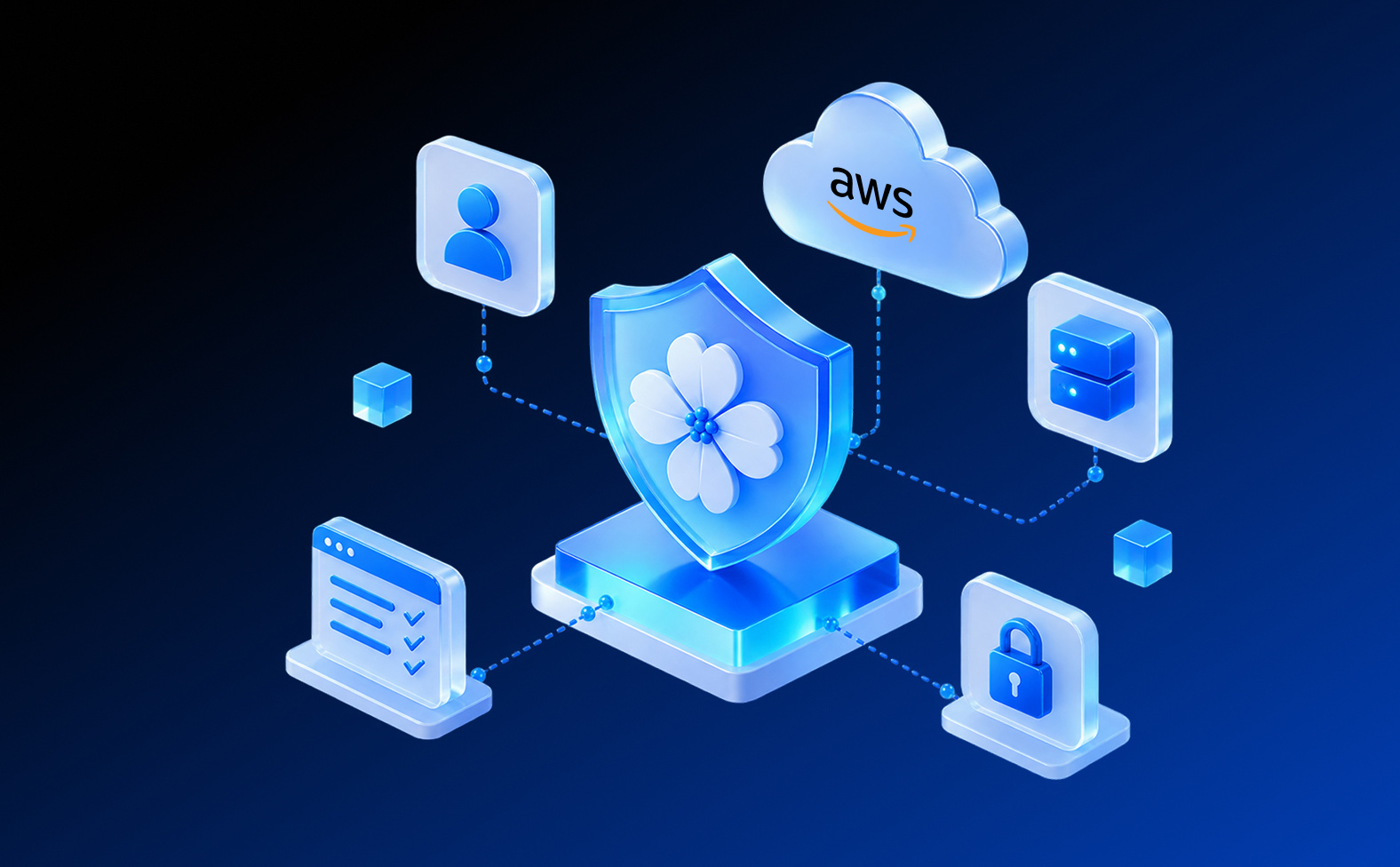
Modern authorization requires a control plane, not just a policy engine. Reva acts as the authorization governance and control plane across Amazon Verified Permissions, Cedar, Open Policy Agent, cloud IAM systems, and emerging AI and agent authorization use cases.
Reva externalizes policy logic from application code and governs it as a first-class asset. Policies are authored, reviewed, tested, and promoted using Policy-as-Code practices with built-in guardrails, approvals, and versioning.
Reva supports native Cedar-based decisioning through the Reva Trust Gateway, while also governing external engines such as AVP for application decisions, OPA for infrastructure policies, and agent authorization scenarios. A single pane of glass provides visibility, normalized decision logs, and continuous compliance.
This enables enterprises to execute the Authorization Modernization Blueprint incrementally, reduce audit effort, minimize over-permissioning, and prepare confidently for zero trust and AI-driven systems.
Conclusion
Authorization has quietly become one of the most critical control points in modern enterprise systems. It governs access to applications, data, infrastructure, and increasingly automated systems and AI agents. Yet in many organizations, it remains fragmented, opaque, and difficult to change.
The Authorization Migration and Modernization Blueprint provides a practical path forward. By externalizing authorization, treating policies as first-class assets, and modernizing incrementally, enterprises can reduce risk while increasing control. Authorization evolves from embedded logic into governed infrastructure that supports zero trust, continuous compliance, and future-ready architectures.
Modernizing authorization does not require disruption. It requires the right sequence, clear visibility, and a control plane designed for change.
Take the Next Step
- Request a Reva Demo: See how a unified control plane can evolve your access control safely.
- Reva Product Overview: High-level overview of governance and AI-assisted policy management.
- Reva on AWS Marketplace: Register via AWS Marketplace for quick onboarding.
.svg)