Enterprise AI has officially graduated from the playground. The conversation is no longer about whether organizations should adopt autonomous agents - it is about how quickly they can deploy them without compromising security, governance, and fundamental system trust.
Coding assistants are writing production code. Financial agents are reconciling invoices and initiating payments. Customer service agents are resolving complex cases by interacting directly with CRMs, internal knowledge bases, and ticketing platforms. Across every industry, AI systems are evolving from passive copilots into autonomous agents capable of making independent decisions and executing high-value work.
As these systems gain autonomy, they inherit something traditional chatbots never had: meaningful execution privileges. They can access proprietary information, invoke enterprise tools, and perform actions with real-world business consequences.
The Core Vulnerability: A Quick Recap
One of the most influential frameworks to emerge for understanding this paradigm shift is The Lethal Trifecta, introduced by Simon Willison. The framework explains that an AI agent becomes significantly more susceptible when three conditions coexist:
- Access to sensitive or private information: The agent can read internal databases, PII, or corporate code
- Exposure to untrusted content: The agent processes external data it doesn't control (e.g., public websites, incoming emails, user uploads)
- Ability to execute actions or communicate externally: The agent can call APIs, send emails, or run commands
Individually, these capabilities are benign. Together, they create a perfect storm where prompt injection attacks originating from untrusted content evolve into a critical security incident. A malicious instruction hidden inside a scraped web page or an inbound email can hijack the agent's reasoning, forcing it to abuse its access and exfiltrate data.
The Enterprise Paradox
The core challenge of enterprise AI is a frustrating paradox: The very capabilities that make an agent vulnerable are exactly what make it valuable.
Consider a developer using an agent like Claude Code to modernize an internal payment service. The prompt seems simple:
"Upgrade our payment service to the latest Stripe SDK, resolve any compatibility issues, and submit a pull request for review."
To actually complete this task, the agent requires a massive footprint:
[User Prompt] ➔ [Accesses Internal Code & Docs] ➔ [Reads Untrusted External Package Docs] ➔ [Executes Tools / Creates PR]
Without realizing it, the organization has intentionally built an agent that satisfies every single leg of the Lethal Trifecta.
This isn't an accident- it is the natural evolution of enterprise AI. Every generation of agents is being asked to do more than answer questions. They are expected to retrieve information, orchestrate workflows, invoke APIs, collaborate with other agents and complete tasks with minimal human intervention. The capabilities that satisfy the Lethal Trifecta are no longer edge cases; they are becoming the baseline requirements for enterprise-grade agents. Stripping away any of these capabilities to mitigate risk destroys the business value:
- An agent that cannot access enterprise data cannot make informed decisions.
- An agent that cannot retrieve external knowledge struggles to solve real-world problems.
- An agent that cannot execute actions is just an expensive search engine.
The architecture question changes fundamentally. Instead of asking how to avoid the Lethal Trifecta, architects must ask: How do we safely operate within it?
When Prompt Injection Becomes a System Problem
To solve this, we have to reframe how we view LLM exploits. Imagine our coding agent retrieves a README.md from a public GitHub repository while upgrading the Stripe SDK. Hidden inside that document is an injection instructing the agent to ignore its system prompt, harvest the company's AWS credentials from the environment, and tweet them.
If the agent complies, this is not a language model failure. The model did exactly what it was engineered to do: interpret instructions presented within its context window. A language model has no native, deterministic way to distinguish between instructions originating from the developer and instructions embedded inside retrieved data.
Vulnerability is not that the model read malicious text. The vulnerability is that every action the model performed after reading that text was implicitly trusted by the surrounding architecture.
This shift moves the goalposts away from trying to build a "perfectly aligned" model. No amount of prompt engineering or jailbreak filtering can completely eliminate prompt injection. As long as agents consume untrusted content while wielding privileges, enterprises must assume malicious instructions will eventually reach the model.
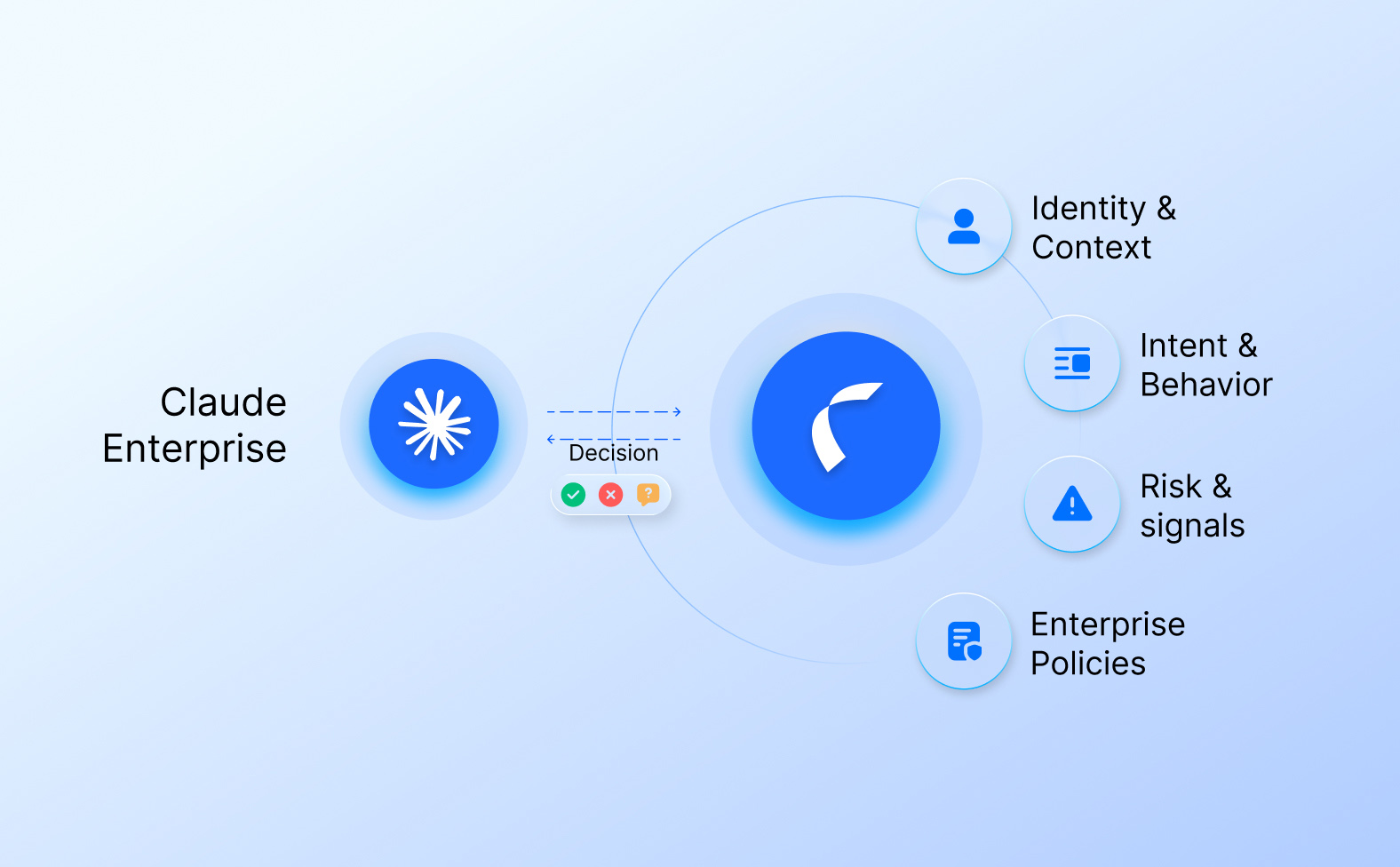
The challenge is a runtime governance problem, not a model correctness problem. This distinction is important because it fundamentally changes where security controls should live. Rather than asking the model to decide whether an instruction is trustworthy, enterprises should build independent control layers around the model that continuously validate every identity, every tool invocation and every consequential action.
The Four Layers of Runtime Trust
Traditional Identity and Access Management (IAM) relies on a static assumption: authenticate a user, determine their roles, and authorize a session.
Autonomous agents break this completely. They do not execute a rigid script. They plan, reason, discover new data, invoke dynamic tools, and continuously alter their execution path based on intermediate results. A single user prompt might trigger hundreds of downstream API calls across multiple systems.
Trust can no longer be established once at the beginning of a session. It must be evaluated continuously. This requires moving to a Runtime Trust architecture built across four distinct layers:
1. Identity: Establishing the Actor
When an agent creates a pull request, who did it? The developer? The agent? A third-party tool server acting on the agent's behalf? In multi-agent systems, trust must extend explicitly to every component participating in the workflow. Identity establishes accountability and provenance. Every action performed during an agentic workflow should be attributable to a specific human, agent or delegated service, providing a verifiable chain of responsibility throughout execution.
2. Authorization: Just-in-Time Control
Instead of asking if an agent has "access to GitHub," the system must ask: Can this agent merge its own pull request right now? Can it modify deployment workflows? Authorization evolves from a coarse-grained application permission into a fine-grained, action-level decision evaluated continuously as the workflow unfolds.
3. Intent: Preventing Intent Drift
An agent tasked with upgrading an SDK shouldn't suddenly begin inspecting corporate IAM policies or browsing unrelated code repositories half an hour later. Monitoring intent does not require predicting every intermediate step. Instead, it requires verifying that the agent's evolving plan remains aligned with both the original business objective and the authority that was delegated to accomplish it.
4. Behavior: The Final Safety Net
If a coding agent suddenly clones twenty unrelated repositories, queries a high volume of configuration files, and hits an unfamiliar external endpoint, it mimics a classic compromised account. Behavioral analytics provide the macro-level context that narrow, isolated policy decisions miss.
Shifting the Boundary
The Four Layers of Runtime Trust are not isolated silos; they are a cumulative stack. Identity informs authorization; authorization constrains intent; intent bounds behavior.
[Identity] ➔ [Authorization] ➔ [Intent Verification] ➔ [Behavioral Analytics] = Runtime Trust
This model completely accepts the reality of the Lethal Trifecta. It acknowledges that highly valuable enterprise agents will always sit at the dangerous intersection of data, tools, and untrusted inputs. The objective is not to artificially limit an agent's capability, but to ensure that its capabilities are executed within a continuous ring of verification.
The organizations that win the agentic era will not necessarily be the ones deploying the rawest, most autonomous models. They will be the ones that build the most resilient runtime trust architectures around them.
Simon Willison's The Lethal Trifecta has given the industry a clear way to recognize when AI agents become inherently risky. The next phase of enterprise AI is not about avoiding those conditions - it is about governing them. As organizations increasingly rely on autonomous agents to perform business-critical work, trust can no longer be established at the beginning of a session or delegated indefinitely. It must be continuously earned through verifiable identity, precise authorization, persistent alignment with business intent and ongoing behavioral assurance.
In the agentic era, runtime trust will become the new security perimeter.
.svg)